World Heritage Identification Number: 1765
World Heritage since: 2026
Category: Cultural Heritage
WHE Type: Infrastructure & Industry
Transboundary Heritage: No
Endangered Heritage: No
Country: 🇨🇳 China
Continent: Asia
UNESCO World Region: Asia and the Pacific
Map
Jingdezhen Handicraft Porcelain Industry Sites: A Millennium of Artisanal Excellence
The Jingdezhen Handicraft Porcelain Industry Sites, inscribed as a UNESCO World Heritage Site in 2026, offer a captivating glimpse into the rich history and cultural significance of Chinese porcelain production. This serial property spans over nine centuries, showcasing the evolution of porcelain manufacturing from the 10th to the 19th century, with far-reaching impacts not only within China but also globally.
More to come…UNESCO Description of the World Heritage Site
The serial property portrays the evolution of the production of handicraft porcelain from the 10th to 19th centuries that had profound industrial, artistic and trading influences in China and beyond globally. The five component parts reflect the processes of the production of porcelain, including the extraction and transportation of raw materials, innovations in kiln design and the spatial and social organisation of production on an immense scale. The town area featured the Imperial Kiln alongside civilian kilns, guilds and merchant associations. Jingdezhen was a centre of technological innovation in porcelain production, including the “binary formula” of mixing kaolin and porcelain stone. Porcelain of the highest quality was produced at Jingdezhen, and its blue-and-white porcelain and designs became a prized global commodity and a symbol of Chinese culture and artistry.Encyclopedia Record: Jingdezhen porcelain
Jingdezhen porcelain is Chinese porcelain produced in or near Jingdezhen in Jiangxi province in southern China. Jingdezhen may have produced pottery as early as the sixth century CE, though it is named after the reign name of Emperor Zhenzong, in whose reign it became a major kiln site, around 1004. By the 14th century it had become the largest centre of production of Chinese porcelain, which it has remained, increasing its dominance in subsequent centuries. From the Ming period onwards, official kilns in Jingdezhen were controlled by the emperor, making imperial porcelain in large quantity for the court and the emperor to give as gifts.Additional Site Details
Area: 1,979 hectares
Number of Components: 5
(iii) — Unique or exceptional testimony to a cultural tradition
(iv) — Outstanding example of a type of building or landscape
(vi) — Directly associated with events or living traditions
Coordinates: 29.2972222222 , 117.201944444
Image
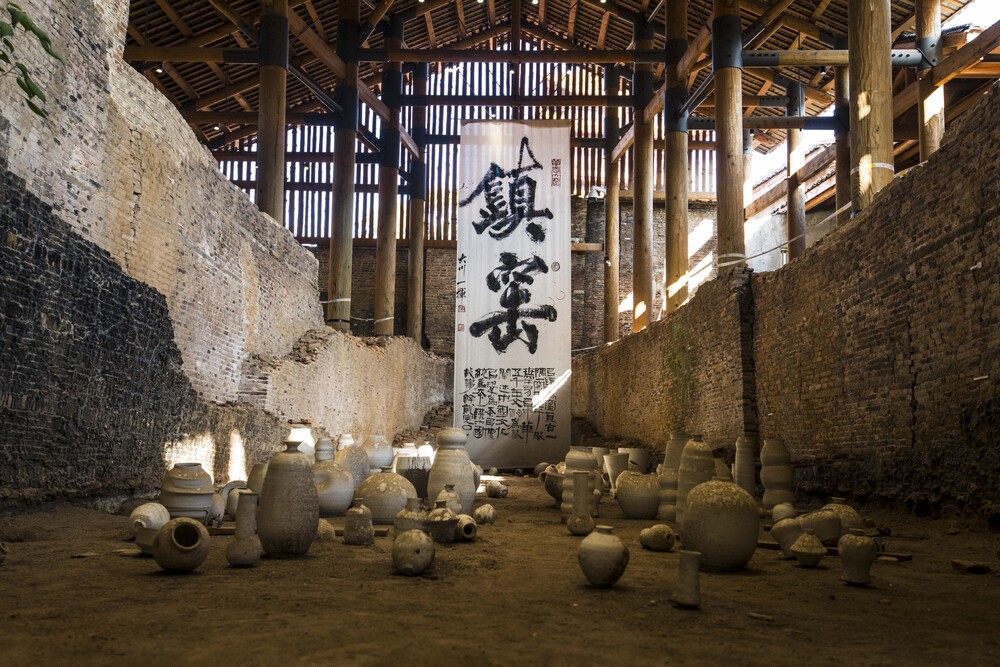
© Jingdezhen Handicraft Porcelain Industry Heritage Conservation Center. Used with permission.